
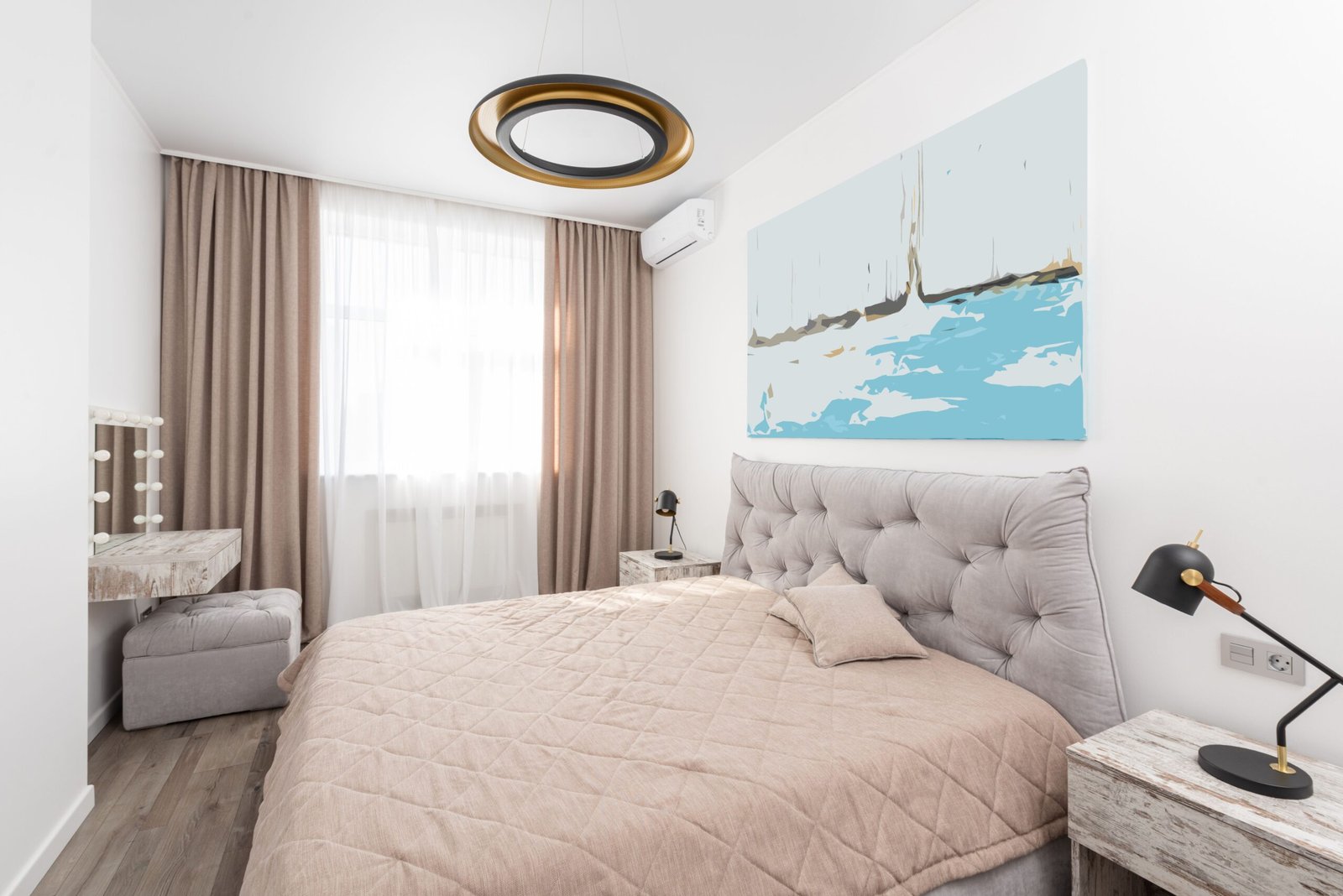
A small bedroom does not have to feel small. The right paint color can completely transform how a room looks and feels — making it appear airier, larger, and far more comfortable to live in.
But with thousands of paint colors available, choosing the right one is genuinely overwhelming. Should you go white? Soft grey? A bold accent wall? And what about those trendy darker shades that designers keep recommending?
This complete guide covers the 10 best colors to paint a small bedroom, the science behind why they work, specific paint shades recommended by interior designers, and expert techniques that make every color choice more effective.
Why Paint Color Affects How Big a Room Feels
Before we get into the colors, it helps to understand why certain colors make a room feel bigger and others make it feel smaller.
Paint color affects perceived room size through three mechanisms:
Light reflection: Light colors reflect more light back into the room, making walls appear to recede and the space feel open and airy. Dark colors absorb light, drawing walls visually inward.
Visual depth: Certain colors — particularly cool tones like soft blues and blue-greens — create a sense of depth that tricks the eye into perceiving more distance between walls than actually exists.
Proportion and contrast: High contrast between wall color and ceiling makes a room feel more box-like and closed. Low contrast between wall and ceiling — using the same color or one shade lighter on the ceiling — removes visual breaks and makes the room feel taller and more continuous.
A color that makes a room feel bigger is doing one or more of these things — softening the wall-to-ceiling transition, creating subtle depth, or improving the perception of proportion.
Understanding this helps you make smarter color choices — and use the colors you choose more effectively.
10 Best Colors to Paint a Small Bedroom
1. Soft White — The Classic That Always Works
White is the most universally recommended color for small bedrooms — and for very good reason. It reflects the maximum amount of light, creates a calm and open energy without drawing attention to the walls, and pairs beautifully with almost any furniture, bedding, or decor style.
But not all white is equal. The specific shade of white you choose makes a significant difference.
What to look for: A warm off-white or cream shade rather than a stark, clinical bright white. Warm whites feel inviting and spacious. Overly bright or cool whites can feel cold and institutional, especially in rooms with limited natural light.
Best white paint shades:
- Sherwin-Williams Alabaster — described by interior designers as a soft white that brightens without feeling cold or stark. One designer calls it a master of illusion
- Benjamin Moore Chantilly Lace — crisp and clean, works beautifully in rooms with good natural light
- Benjamin Moore White Dove — a warm, slightly creamy white that feels universally flattering
Pro tip: Use slightly lighter tones on the ceiling and trim than on the walls rather than high-contrast shades. This creates more visual space instead of giving the room a box-like feeling.
Finish: Always use an eggshell or satin finish in a small bedroom — these finishes reflect light more effectively than flat paint and help brighten corners, making the room feel smoother and more spacious.
2. Soft Blue-Green — The Colour That Tricks the Eye
Muted, sophisticated blue-green is one of the most effective — and underused — colours for small bedrooms. The key is the word muted. Bold teal makes a room feel smaller. Soft, slightly greyed blue-green actively tricks the eye into perceiving more depth and space.
This works particularly well in awkward narrow spaces — bedrooms that feel like corridors, rooms with low ceilings, or spaces with limited natural light. In those situations, a warm neutral simply sits there. A soft blue-green actively creates the illusion of distance between the walls.
Best soft blue-green paint shades:
- Benjamin Moore Gossamer Blue — soft, sophisticated, and very effective in small spaces
- Farrow and Ball Mizzle — a complex, muted blue-green with beautiful depth
- Sherwin-Williams Rainwashed — gentle, airy, and universally flattering
What to avoid: Going too saturated. You want a colour that looks like it has been left in the sun for a season — soft, faded, and slightly greyed. Bold teal is the wrong direction entirely.
Best for: Small bedrooms with limited natural light, narrow rooms, bedrooms that feel boxy
3. Cool Light Grey — Modern and Spacious
Light cool grey is one of the most popular alternatives to white for small bedrooms — and interior designers love it for good reason. It feels sophisticated, modern, and genuinely spacious without the potential coldness of bright white.
Cool grey works particularly well in modern interiors. It has a cool undertone that reflects light beautifully and pairs well with everything from white bedding to warm wood furniture.
Best light grey paint shades:
- Sherwin-Williams Passive — a cool, airy grey that works in almost any bedroom
- Benjamin Moore Agreeable Gray — technically a greige (grey-beige) but one of the most popular small room colours ever
- Farrow and Ball Mist — soft, enveloping, and beautifully subtle
Styling tip: Pair pale grey walls with white or cream bedding and warm wooden furniture for a bedroom that feels both modern and cosy. Add metallic or chrome accents for a sleeker, more contemporary finish.
4. Off-White and Cream — Warm and Inviting
If pure white feels too stark or cool for your taste, off-white and cream tones are the perfect alternative. They offer all the light-reflecting benefits of white while adding a warmth that makes a small bedroom feel genuinely inviting rather than clinical.
Off-white paint is a simple, clean colour that makes a space feel more open and inviting. The room begins to feel larger when you contrast it with natural greenery, warm wood furniture, or vibrant soft furnishings.
Best off-white and cream shades:
- Sherwin-Williams Creamy — warm, soft, and very flattering in natural light
- Benjamin Moore White Heron — a slightly warmer white that works beautifully in any bedroom
- Farrow and Ball Pointing — a complex, creamy white with warm undertones that feels genuinely luxurious
Styling tip: Off-white walls work brilliantly with darker wooden flooring or a warm-toned rug — the contrast between wall and floor adds depth and makes the space feel more layered and interesting.
5. Soft Sage Green — Calm and Expansive
Sage green — a soft, muted, slightly grey-toned green — is one of the most beautiful and increasingly popular choices for small bedrooms. Green is associated with nature and the outdoors, and softer shades of green have a remarkable ability to make a small room feel calm, spacious, and connected to the natural world.
Softer shades of green can instantly make a small room appear bigger and turn a drab space into a calm sanctuary. Green works particularly well in bedrooms because of its naturally calming effect — it is one of the easiest colours to sleep in.
Best sage green paint shades:
- Sherwin-Williams Privilege Green — soft, muted, and beautiful in natural light
- Benjamin Moore Pale Sage — gentle and incredibly versatile
- Farrow and Ball Mizzle — sits between blue-green and sage, with a beautiful natural quality
Styling tip: Sage green walls pair exceptionally well with warm natural materials — linen bedding, rattan furniture, wooden floors, and terracotta accessories. The result is a bedroom that feels like a genuine retreat.
6. Light Taupe — The Overlooked Neutral
Taupe occupies the space between warm beige and cool grey — and it is one of the most underrated colours for small bedrooms. If you want the warmth of beige without the yellowness, or the sophistication of grey without the coolness, taupe is the answer.
Light taupe is a great alternative to the harshness of white while still providing the neutral, space-enhancing quality you need in a small bedroom. It creates the illusion of openness rather than making the space feel cluttered or closed in.
Best taupe paint shades:
- Sherwin-Williams Accessible Beige — warm, versatile, and universally flattering
- Benjamin Moore Revere Pewter — a classic warm grey-beige that works in virtually any room
- Farrow and Ball Elephant’s Breath — a complex warm grey with beautiful depth
Best for: Small bedrooms where you want warmth without colour, classic or traditional decor styles
7. Pale Lavender — Soft, Feminine, and Spacious
Pale lavender is a beautiful and surprisingly effective colour for small bedrooms. Like soft blue and sage green, the cool undertones in pale lavender cause walls to visually recede — making the room feel larger and airier than it actually is.
Pale lavender also has a naturally calming and restful quality that makes it particularly well-suited to bedrooms. It is feminine without being overpowering, and works beautifully in rooms with both warm and cool light.
Best pale lavender paint shades:
- Benjamin Moore Morning Sky — a soft, barely-there lavender with beautiful light quality
- Sherwin-Williams Lavender — delicate and genuinely spacious-feeling
- Farrow and Ball Brassica — deeper lavender for those who want more colour
Styling tip: Pair pale lavender walls with white bedding, natural wood furniture, and soft gold accessories for a bedroom that feels elegant, serene, and larger than it actually is.
8. Warm Peach or Blush Pink — Cosy Without Closing In
Peach and blush pink might not be the first colours that come to mind for a small bedroom — but warm, muted versions of these colours can actually make a small room feel warm, inviting, and surprisingly open.
The key is choosing a muted, desaturated version of the colour. Warm light tan colours with sunlight streaming through open windows increase the dimensions of the room — the space looks more inviting simply by using warmer tones that please the eye.
Best warm peach and blush shades:
- Sherwin-Williams Peach Amber — warm and inviting without feeling too pink
- Benjamin Moore Coral Gables — a soft, sophisticated blush-peach
- Farrow and Ball Setting Plaster — one of the most beautiful and popular blush tones available
Best for: Small bedrooms with south-facing windows and good natural light, feminine or romantic bedroom aesthetics
9. Deep Navy or Jewel Tones — The Unexpected Expert Recommendation
This one surprises most people — but experienced interior designers consistently recommend dark colours for feature walls in small bedrooms, and the reasoning makes perfect sense.
A dark navy or jewel-toned feature wall can actually make a small room look larger by creating a sense of visual depth that light colours cannot achieve. When you add a punch of boldness on one wall, it gives the eye somewhere to land, creating a visual break. It is a fun, dramatic effect. Dark blue has the transformative power to make a statement — and small rooms are often the best place to make an impact.
Richer tones on one wall with lighter, bright tones throughout open the space in the room. It feels moody and bold, which distracts from the lack of space.
Best jewel tone shades for feature walls:
- Farrow and Ball Hague Blue — a deep, complex navy that works beautifully as a feature wall
- Sherwin-Williams Naval — rich, deep navy with warm undertones
- Benjamin Moore Newburyport Blue — classic and beautiful
How to use dark colours in a small bedroom:
- Paint just one wall — typically the wall behind the bed headboard — in a deep tone
- Keep all other three walls in a light, complementary neutral
- The contrast creates depth and drama while the light walls maintain the feeling of space
10. Monochromatic Tan and Beige — The Minimalist Approach
One of the most effective strategies for making a small bedroom feel larger is the monochromatic approach — using the same colour family throughout the room in slightly different tones, from walls to bedding to soft furnishings.
Choosing solid colour monochromes can have a positive influence on small floor space. Monochrome palettes like tan and beige have the opposite effect to bold patterns — they create the illusion of openness rather than making the space feel cluttered and closed in.
When the walls, bedding, curtains, and furniture all exist within the same colour family, the eye does not stop at the boundary of the wall — it flows smoothly from one surface to the next, making the entire room feel like one connected, expansive space.
Best monochromatic colour families for small bedrooms:
- Warm whites, creams, and linens
- Soft greys and silver tones
- Tans, beiges, and warm caramels
- Sage greens and natural tones
How to Choose the Right Colour for Your Specific Bedroom
The best colour for your small bedroom depends on more than just personal preference. These four factors should guide your decision:
Factor 1 — Natural Light
This is the single most important consideration.
Good natural light (south or west facing): You can use slightly deeper or warmer colours without the room feeling dark or closed in. Creams, warm whites, and even soft sage green work beautifully.
Limited natural light (north or east facing): Stick to the lightest, most reflective colours possible — bright whites, cool greys, and soft blue-greens. Avoid warm yellow or orange undertones in rooms with little natural light as they can make the space feel murky.
Factor 2 — Ceiling Height
Low ceilings: Paint the ceiling the exact same colour as the walls — or just one shade lighter. This removes the visual break between wall and ceiling and makes the room feel taller. Avoid dark or contrasting ceilings in rooms with low ceilings.
Standard or high ceilings: You have more flexibility. A slightly deeper ceiling colour can actually feel cosy and intentional in a room with higher ceilings.
Factor 3 — Undertones
Every paint colour has an undertone — a subtle hint of another colour that only becomes visible once it is on your walls and interacting with your specific lighting.
A cool grey with a blue undertone will look very different from a cool grey with a green undertone. Always test paint in your specific room before committing to a full paint job — look at it in both daylight and artificial light.
Factor 4 — Existing Furniture and Flooring
Your wall colour needs to work with what is already in the room. Cool grey walls clash with very warm golden wood furniture. Sage green walls pair beautifully with rattan and natural materials but can look odd with very modern chrome furniture.
Look at the dominant tones in your flooring and existing furniture before choosing a wall colour, and make sure the undertones complement rather than clash.
Expert Painting Techniques That Make Any Colour Work Better
Paint the Ceiling the Same Colour as the Walls
This is one of the most effective tricks for making a small bedroom feel larger. Painting the ceiling the same colour as the walls — or just one shade lighter — removes the visual break between wall and ceiling and makes the room feel taller and more continuous.
Bright white trim against coloured walls can make a room feel boxed in. A low-contrast approach — using a similar or slightly lighter tone on the trim — creates a far more spacious result.
Use Vertical Stripes to Add Height
If your small bedroom has particularly low ceilings, vertical stripes painted on the walls draw the eye upward and create the illusion of height. Even subtle tone-on-tone stripes — slightly different shades of the same colour — are enough to create this effect without the room feeling busy or overwhelming.
Go Monochromatic
As described in colour option 10 above, decorating in a single colour family throughout the room — walls, bedding, curtains, and soft furnishings — creates a continuous, flowing visual experience that makes the room feel significantly larger.
Mirror Placement
While not a paint technique, mirror placement works hand-in-hand with paint colour. A large mirror on one wall reflects both light and your chosen paint colour deeper into the room — doubling the visual impact of your colour choice and making the space feel significantly larger.
Final Thoughts
The best colour to paint a small bedroom is not one universal answer — it is the colour that works best for your specific room, your light, your furniture, and how you want the space to feel.
That said, if you are unsure where to start, you genuinely cannot go wrong with a warm white like Sherwin-Williams Alabaster or a soft blue-green like Benjamin Moore Gossamer Blue. Both are tried-and-tested by interior designers across thousands of small rooms — and both consistently deliver a bedroom that feels larger, calmer, and more beautiful than before.
Test your chosen colour as a sample on the wall first, view it at different times of day, and commit once you are confident it works in your specific space. The right colour choice — combined with the right finish and the right techniques — can make a small bedroom feel genuinely spacious and serene.