
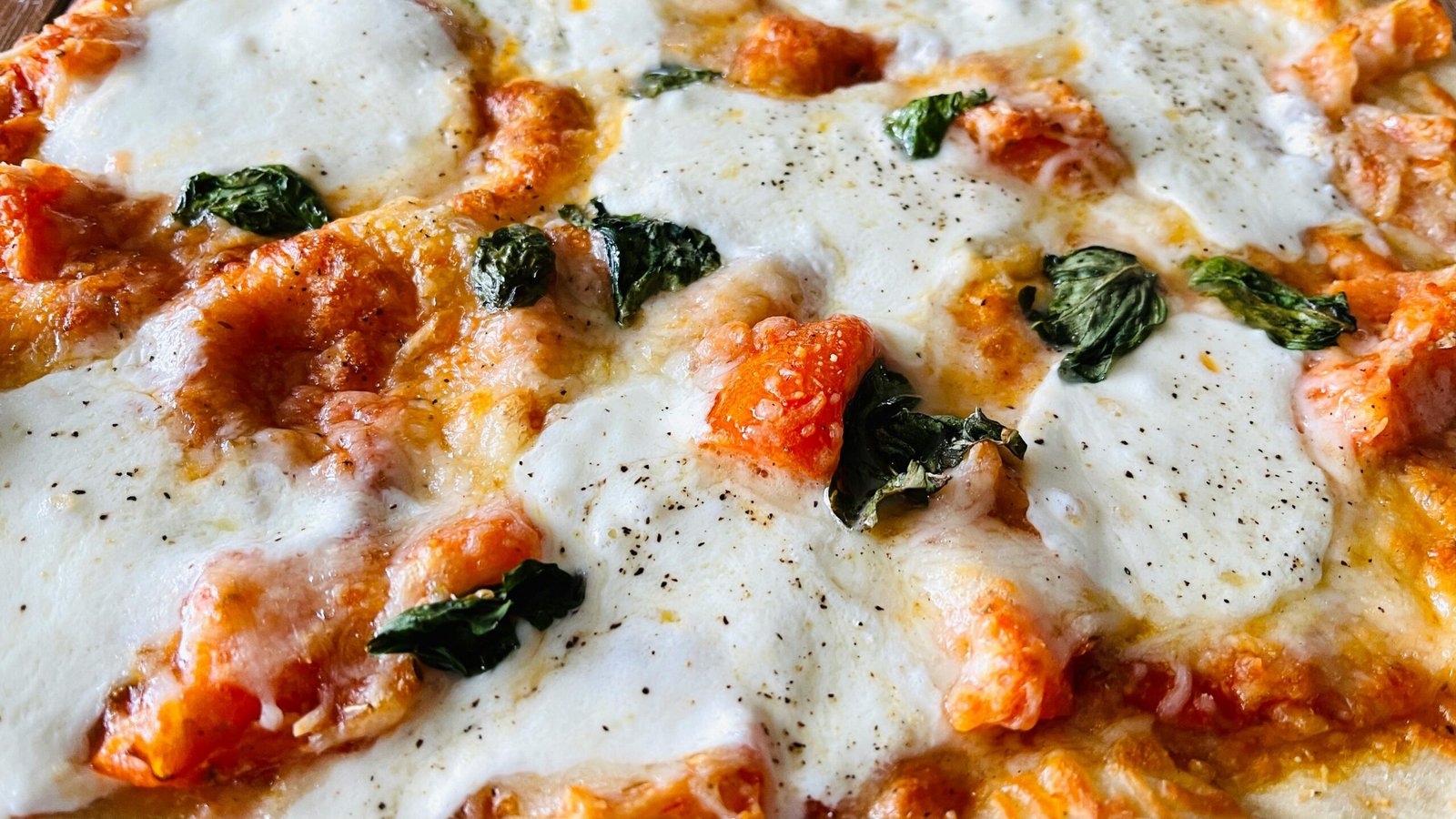
Margherita pizza is one of the most famous foods in the entire world — and also one of the simplest. No elaborate toppings, no complicated sauces, no long list of ingredients. Just a handful of fresh, high-quality components that together create something genuinely extraordinary.
But what exactly goes on a margherita pizza? And why do those specific ingredients matter so much?
This complete guide answers every question — from the history of the pizza to every single ingredient, why each one is used, and exactly how to put it all together at home.
The History of Margherita Pizza
Margherita pizza — the classic thin-crust pie from Naples — was named for Queen Margherita of Savoy. As the story goes, she was served a pizza in 1889 that resembled the Italian flag — with red tomatoes, white mozzarella, and green basil — and the rest is history.
The pizza was created by Italian chef Raffaele Esposito, who made three different pizzas for the Queen during her visit to Naples. She loved the tomato, mozzarella, and basil combination so much that she sent him a personal letter of thanks — and he named the pizza in her honour.
Over 130 years later, the recipe has barely changed. That is a testament to how perfectly those three ingredients work together.
What Are the Traditional Ingredients on a Margherita Pizza?
In Italy, the traditional margherita pizza topping ingredients are fresh mozzarella cheese, basil leaves, and a sauce made from crushed tomatoes, garlic, salt, and herbs.
That is it. Four main components:
- Pizza dough (the base)
- Tomato sauce
- Fresh mozzarella cheese
- Fresh basil
Plus two finishing touches: 5. Extra virgin olive oil 6. Salt
The simplicity and freshness of the ingredients are what makes this pizza so phenomenal. But because the recipe is so simple, the quality of every single ingredient matters enormously. There is nowhere to hide with a margherita pizza — if the tomatoes are bland or the cheese is poor quality, you will taste it immediately.
Every Ingredient Explained in Detail
1. The Dough — The Foundation of Everything
The base of a margherita pizza is a thin, crispy-yet-chewy Neapolitan-style pizza dough. Getting this right is just as important as the toppings.
Traditional dough ingredients:
- Tipo 00 flour (finely ground Italian flour)
- Water
- Salt
- Yeast
- A small amount of olive oil
Tipo 00 is finely ground Italian flour that makes the signature chewy-yet-crispy texture that makes authentic Italian pizza so irresistible. If you cannot find Tipo 00, bread flour works as a good substitute.
The dough should be stretched thin — a classic Neapolitan margherita pizza has a thin centre with a slightly thicker, puffy, charred edge called the “cornicione.”
For a quick homemade version: Regular all-purpose flour works perfectly well. You can also use a no-yeast pizza dough if you want to skip the rising time entirely.
2. The Tomato Sauce — Simple and Uncooked
The tomato sauce on a margherita pizza is deceptively simple — and that simplicity is exactly what makes it so good.
Traditional margherita pizza sauce ingredients:
- San Marzano canned tomatoes
- Garlic (1 to 2 cloves)
- Extra virgin olive oil
- Salt
- A pinch of dried oregano (optional)
The sauce is traditionally made from San Marzano tomatoes. Instead of cooking it down, the tomatoes are crushed and lightly seasoned to retain all the natural sweetness and acidity.
San Marzano tomatoes are a special variety of plum tomato originating from the San Marzano region near Naples, Italy. They are tender and rich in flavour, and even the tomato sauce inside the can is thicker than most other whole canned tomatoes.
Why no-cook sauce? Cooking a pizza sauce before it goes on the dough actually removes some of the fresh, bright flavour. Since the sauce will cook in the oven anyway, starting with raw crushed tomatoes gives you a much more vibrant, fresh-tasting result.
How much sauce to use: Less than you think. A thin, even layer is all you need. The key is to resist overloading — margherita pizza is about balance, letting each ingredient shine without competing for attention.
3. Fresh Mozzarella — The Heart of the Pizza
This is perhaps the single most important topping on a margherita pizza — and the ingredient that most separates a great margherita from a mediocre one.
Margherita pizza is made with buffalo mozzarella — a drizzle of olive oil and fresh basil leaves complete the classic topping.
How to prepare fresh mozzarella:
- Slice it thinly or tear it into rough pieces
- Pat it dry with paper towels before adding to the pizza — fresh mozzarella contains a lot of water and will make the crust soggy if not dried first
- Scatter it evenly over the sauce — do not pile it in the centre
How much to use: Do not cover every inch of the pizza. Leave gaps between the cheese — this allows the sauce to show through and ensures the cheese melts evenly rather than becoming a rubbery slab.
4. Fresh Basil — Added After Baking
Fresh basil is sprinkled over the pizza after baking so that it does not wilt in the oven.
This is a detail that many home cooks get wrong — they add the basil before baking, and it turns black and bitter in the heat. Always add fresh basil after the pizza comes out of the oven.
How to use basil on margherita pizza:
- Tear the leaves by hand rather than chopping — this releases more flavour and looks more authentic
- Scatter generously over the hot pizza immediately after it comes out of the oven
- The residual heat will gently warm the basil and release its fragrance
Fresh basil represents the green stripe of the Italian flag — along with the red of the tomato sauce and the white of the mozzarella cheese.
5. Extra Virgin Olive Oil — The Finishing Touch
Margherita pizza is not complete without a light drizzle of extra virgin olive oil. Be careful as you pour so you do not accidentally overdo it.
Olive oil is added in two ways:
Before baking: A light drizzle over the assembled pizza — especially around the crust edges — helps the crust become golden and adds richness to the overall flavour.
After baking: A final drizzle of high-quality extra virgin olive oil over the finished pizza adds a beautiful fruity, peppery note that you simply cannot get from cooking oil.
Always use extra virgin olive oil — not regular olive oil, not vegetable oil. The flavour difference is significant on a pizza this simple.
6. Salt — Do Not Skip It
A sprinkle of flaky sea salt or kosher salt finishes the pizza perfectly.
Salt is added in two places:
- Into the dough itself during preparation
- As a light finishing sprinkle over the completed pizza
A small pinch of flaky sea salt over a freshly baked margherita pizza brings all the flavours together and adds a satisfying crunch.
Complete Margherita Pizza Recipe
Now that you know every ingredient and why it matters, here is the complete recipe:
Ingredients (makes one 12-inch pizza)
For the dough:
- 2 cups all-purpose flour (or Tipo 00 flour)
- 1 teaspoon instant yeast
- ¾ teaspoon salt
- ¾ cup warm water
- 1 tablespoon olive oil
For the tomato sauce:
- 1 can (400g) San Marzano whole tomatoes
- 1 garlic clove, minced
- 1 tablespoon extra virgin olive oil
- ½ teaspoon salt
- Pinch of dried oregano
For the toppings:
- 150g fresh mozzarella (fior di latte or buffalo)
- Large handful of fresh basil leaves
- 2 tablespoons extra virgin olive oil
- Flaky sea salt for finishing
Step by Step Instructions
Make the dough:
- Mix flour, yeast, and salt in a large bowl
- Add warm water and olive oil and mix until a rough dough forms
- Knead on a floured surface for 8 to 10 minutes until smooth and elastic
- Place in a lightly oiled bowl, cover, and let rise for 1 to 2 hours until doubled
Make the sauce:
- Drain the canned tomatoes and crush them by hand or with a fork directly into a bowl
- Add the minced garlic, olive oil, salt, and oregano
- Stir to combine — do not cook the sauce
Assemble and bake:
- Preheat your oven to its highest setting — 475°F to 500°F (245°C to 260°C) — for at least 30 minutes
- Stretch the dough by hand into a thin 12-inch circle on a floured surface
- Transfer to a parchment-lined baking tray or a hot pizza stone
- Spread a thin, even layer of tomato sauce over the dough, leaving a 1-inch border
- Pat the mozzarella dry and tear or slice it over the sauce
- Drizzle lightly with olive oil
- Bake for 10 to 13 minutes until the crust is golden and the cheese is bubbling with some light brown spots
- Remove from the oven and immediately scatter fresh torn basil leaves over the top
- Finish with a drizzle of extra virgin olive oil and a pinch of flaky sea salt
- Slice and serve immediately
Tips for the Best Homemade Margherita Pizza
Use the best tomatoes you can find San Marzano tomatoes genuinely taste different — they are sweeter, less acidic, and have a thicker flesh. They are worth the extra cost for a margherita pizza where the tomato flavour is front and centre.
Dry your mozzarella thoroughly This is the most important tip for avoiding a soggy pizza. Fresh mozzarella contains a lot of water. Place slices on a paper towel for at least 15 minutes before using.
Make your oven as hot as possible The hotter the oven, the faster the pizza cooks — and a fast cook at high heat is what gives you a crispy base and bubbling, slightly charred cheese. Preheat your oven for at least 30 minutes before baking.
Use a pizza stone if you have one A preheated pizza stone absorbs and distributes heat in a way that a regular baking tray cannot match. The result is a much crispier, more evenly cooked base.
Do not add too much sauce A thin, even layer is all you need. Excess sauce makes the centre of the pizza soggy and prevents the crust from crisping up properly.
Less is more with the cheese Scatter the mozzarella — do not pile it. You want to see patches of red tomato sauce between the white cheese — this is exactly what an authentic margherita pizza looks like.
Frequently Asked Questions
Is margherita pizza just cheese pizza? No — margherita pizza is specifically tomato sauce, fresh mozzarella, and fresh basil on a pizza dough. A plain cheese pizza typically uses shredded low-moisture mozzarella with no basil. The two are very different in flavour, texture, and appearance.
Does margherita pizza have garlic? Garlic is typically added to the tomato sauce in small amounts but is not a visible topping. Some versions omit it entirely — it is optional.
Can I use dried basil instead of fresh? You can, but the result will be noticeably less flavourful. Fresh basil added after baking is one of the signature characteristics of a true margherita pizza. If fresh basil is unavailable, add a very small pinch of dried basil into the sauce instead.
What is the difference between margherita pizza and regular pizza? Margherita pizza uses fresh mozzarella, a simple uncooked tomato sauce, and fresh basil — all high-quality, minimal ingredients. Regular pizza typically uses shredded processed mozzarella, cooked pizza sauce, and a wide variety of toppings.
Can I add toppings to a margherita pizza? You can add whatever you enjoy — but technically it is no longer a margherita once you add extra toppings. It becomes a different pizza. That said, cooking at home means you make the rules.
Final Thoughts
The beauty of margherita pizza is its simplicity. Four main ingredients — dough, tomato, mozzarella, basil — plus olive oil and salt. Nothing complicated, nothing unnecessary.
What makes a great margherita pizza is not a long ingredient list — it is the quality of each ingredient and the care taken in putting them together. Use the best tomatoes you can find, the freshest mozzarella available, and good extra virgin olive oil — and the result will be one of the most satisfying things you have ever made in your kitchen.